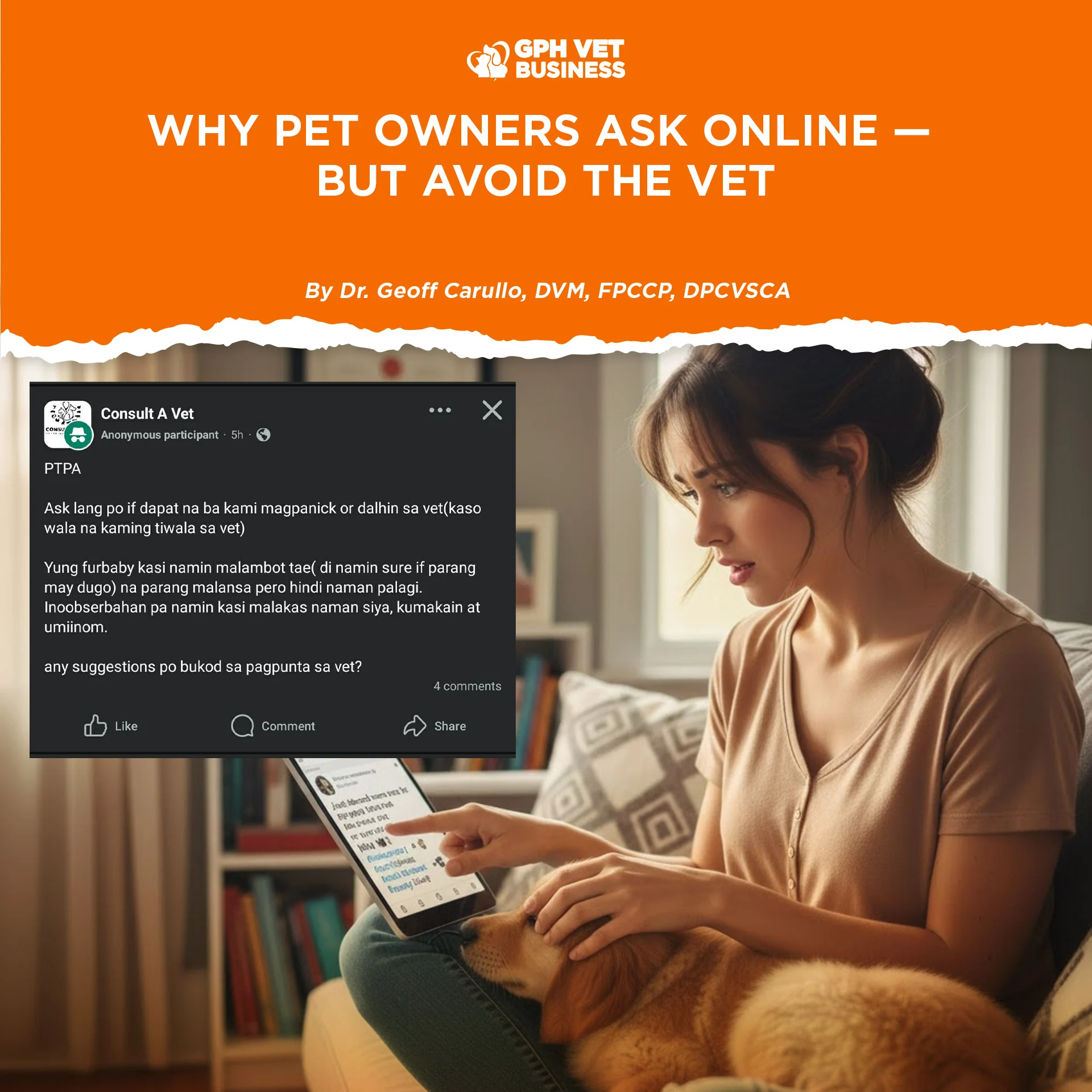
Many of us reading threads like this feel a familiar mix of concern and frustration:
“Our dog has soft stools, sometimes it looks like blood and it smells bad.
The dog is still active and eating.
We’re observing for now — because we don’t trust vets anymore.
Any suggestions aside from going to a vet?”
They are inside a Consult-A-Vet group.
They want veterinary help.
But they don’t want the clinic experience.
This isn’t just about diarrhea.
This is about trust — and why it breaks.
They don’t hate veterinarians. Something broke.
Distrust doesn’t usually start with one event.
It grows from moments like:
• Unclear explanations
• A bill that felt too expensive
• Conflicting advice from different vets
• Feeling judged or rushed
• Losing a pet despite treatment
• Hearing social-media horror stories
• Fear of cost and guilt if they “cannot afford care”
These owners are not necessarily irresponsible.
Most are:
✔ Worried
✔ Confused
✔ Afraid to be scolded
✔ Afraid of costs
✔ Afraid of repeating a painful experience
So they choose what feels safer:
• Anonymous posts
• Free answers
• Zero pressure
Ironically — they still want a veterinarian.
They just want distance first.
“But the pet is still eating — so maybe it’s fine?”
For many owners:
Eating = not serious
We know better.
Soft stool, foul odor, possible blood may mean:
• Parasites
• Dietary irritation
• GI infection or inflammation
• Foreign material
• Toxins
• Early serious disease
But in their minds:
“He looks okay — maybe we can just observe.”
That’s not stubbornness.
That is coping — choosing the least-scary explanation.
Facebook becomes the “permission slip”
The danger is not that they ask questions.
The danger is what they hope to hear:
❌ “Normal lang — observe only.”
❌ “Home remedy first.”
❌ “It will pass.”
They are not always searching for truth.
Sometimes, they’re searching for permission to delay.
And delay is what hurts pets most.
As veterinarians, how do we respond?
Not with:
“If you don’t trust vets, don’t ask here.”
Instead, we start with:
“What happened that made you lose trust?”
Every story has a root.
1. Acknowledge the fear
“Thank you for asking — I know it’s worrying to see soft stools or blood.”
When they feel heard, defenses drop.
2. Educate gently — without shaming
Explain clearly:
• Blood is never “normal”
• Diarrhea can shift quickly
• Guessing online has limits
• Complications become more expensive later
Short. Calm. Respectful.
3. Explain why the exam matters
Not simply:
“Go to the vet.”
But:
“We need to check hydration, temperature, abdomen, and stool — things we can’t safely judge online.”
We don’t command; we guide.
4. Speak honestly about costs
Money fear is real.
Offer:
• Step-by-step approaches
• Baseline diagnostics first
• Transparent estimates
• Prevention vs emergency reality
We are not selling.
We are staying partners.
The deeper message to our profession
Threads like this aren’t attacks.
They are feedback:
“Doc, I want help — I just need to feel safe with you again.”
Veterinary practice is not only medicine.
It is also:
✔ Communication
✔ Empathy
✔ Clarity
✔ Patience
✔ Trust-building
When trust returns, Facebook becomes the last stop — not the first.
And pets get the care they deserve.
Sharing this helps others understand what it really means to be a vet.
Like and follow if you’re with us.