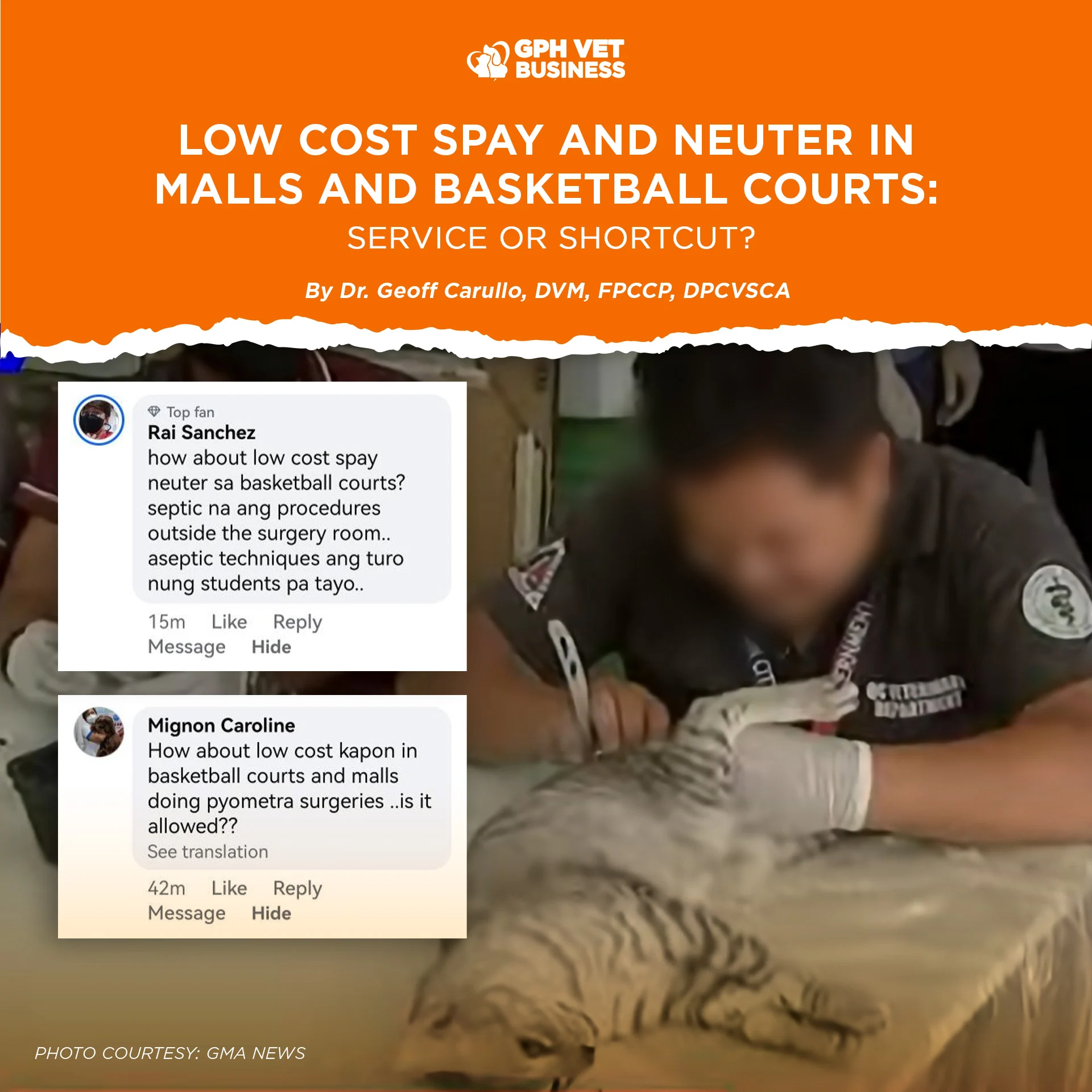
Low cost spay and neuter exists for a real reason: too many unwanted pets, not enough access. Done properly, sterilization saves lives, prevents disease, and reduces overpopulation.
But when surgeries start happening in mall corridors and basketball courts, one question matters:
“If this were my own surgery… would I accept this setup?”
That question exposes the ethical line.
- What the law expects
Two laws guide us in the Philippines:
- RA 9268 – only licensed veterinarians may practice surgery, with proper professional standards.
- RA 8485 / RA 10631 – any place used to treat animals must meet animal welfare requirements and be supervised.
So outreach is not the problem.
Poor standards are.
- Outreach isn’t “bahala na”
High-quality, high-volume spay neuter (HQHVSN) means:
- proper exam and anesthesia
- aseptic surgical area
- sterilized instruments per patient
- real anesthesia monitoring
- pain control and follow-up
- documentation and emergency plans
A court or mall can be converted — but only with barriers, workflow, sterilization, monitoring equipment, and clear accountability.
- When it becomes risky
Red flags we should never ignore:
- dusty, open areas with people walking around
- reused instruments without proper autoclaving
- no real patient screening or informed consent
- minimal anesthesia monitoring
- weak post-op instructions or no follow-up
- unlicensed assistants doing more than they legally should
- venues repeatedly acting as unaccredited “clinics”
When these show up, low cost turns into low standard — and the animal carries the risk.
- Why vets get uneasy
- The public starts thinking surgery is “madali lang”
- Good clinics face unfair pressure to cut corners
- Moral stress rises among vets who want to help but see danger
- Legal and disciplinary risk skyrockets when complications happen
- When outreach is justified
It can be ethical when:
- there’s a clear public health and overpopulation goal
- permits and welfare clearances are obtained
- HQHVSN standards are strictly followed
- low price comes from subsidies, not shortcuts
- transparency and follow-up are guaranteed
Location can change. Standards cannot.
- What vets should remember
If invited to join these events:
- review the setup
- ask about sterilization and monitoring
- insist on consent and documentation
- set non-negotiables
- walk away if safety is compromised
No advocacy is worth your license — or an animal’s life.
- For pet owners
Before saying yes to a cheap spay:
- Who is the licensed vet in charge?
- How will anesthesia be monitored?
- Where is the follow-up?
- What happens if there’s an emergency?
Low cost should never mean “walang paki.”
The bottom line
We all want fewer strays and better welfare. But the solution must never be shortcuts.
Affordable is good.
Unsafe is not.
Our responsibility is not only to make surgery cheaper —
but to make it ethical, accountable, and safe wherever it happens.
Sharing this helps others understand what it really means to be a vet. Like and follow if you’re with us.