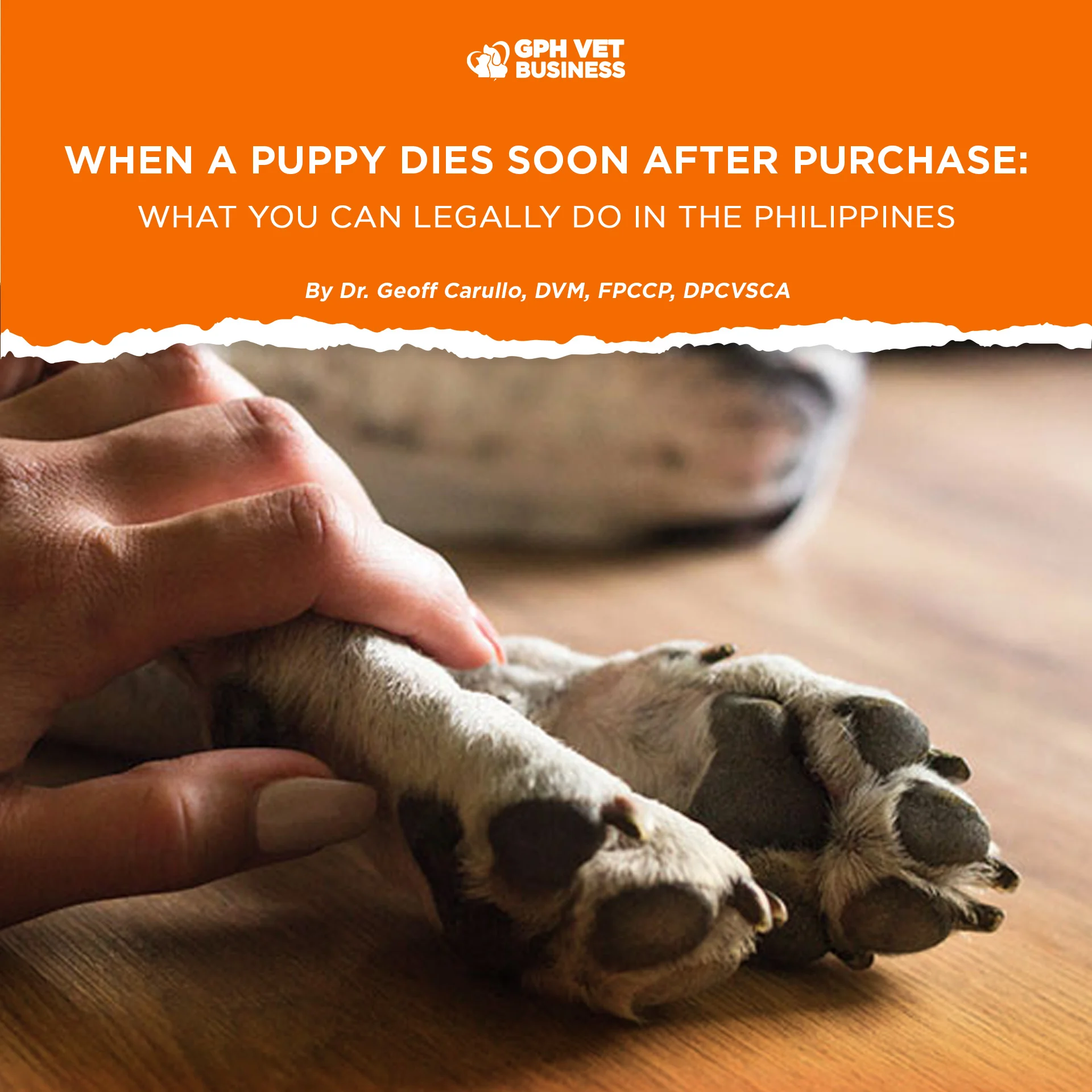
Few things are more heartbreaking than bringing home a new puppy… only to watch it become sick and die a few days later.
Sadly, this happens more often than people realize — especially with diseases like parvovirus.
And when it happens, the next question is always the same:
“May karapatan ba akong humingi ng refund or compensation from the seller?”
The short answer:
In many situations — yes.
But it has to be handled the right way.
This article explains the legal options available in the Philippines, what evidence is needed, and what steps families can take without immediately going to court.
-
Why this situation is legally important
When someone sells a puppy, they are not just selling an item.
They are selling a living animal that is expected to be:
- reasonably healthy
- fit for the purpose of being a companion
- honestly represented to the buyer
If the puppy is sold as “healthy,” but turns out to have parvo or another serious disease shortly after purchase, this can fall under:
- misrepresentation
- defective sale
- possible violation of consumer protection laws
Especially if the puppy dies within days of arriving home.
-
Can buyers demand a refund?
Yes — buyers may legally demand:
- a full refund
- reimbursement of veterinary expenses
- or cancellation of the sale
A replacement puppy is sometimes offered by sellers, but many families refuse — and understandably so:
After the trauma of losing one puppy, trust is already gone.
Refund is a reasonable request.
-
What you need before demanding anything
Emotion alone is not enough. Documentation protects you.
Prepare:
- proof of payment (receipt, screenshots, bank transfer)
- veterinary records confirming parvo or illness
- photos and videos of the dog
- chat conversations with the seller
- timeline (arrival date, onset of symptoms, date of death)
If the puppy became sick very shortly after purchase, this strongly suggests infection existed before it reached the buyer.
-
What to do step-by-step
4.1 Talk to the seller politely — but clearly
State what happened and request:
- refund of purchase price
- refund of vet bills (if reasonable)
Avoid threats and shouting. Calm communication often works first.
If the seller refuses and insists on “replacement only,” move to step two.
4.2 Send a formal demand letter
This is a simple written notice giving the seller a deadline (7–10 days) to return:
- purchase price
- reasonable medical expenses
This shows you are serious and willing to pursue legal channels if ignored.
4.3 File a complaint at the barangay or DTI
You may file:
- Barangay mediation
- Consumer complaint with DTI (for deceptive selling practices)
These offices can summon the seller and mediate. Many issues are resolved here without court involvement.
4.4 If negotiation fails — Small Claims or Civil Case
If refund + vet costs are not returned, and the amount is within Small Claims Court limits, the buyer can file there:
- No lawyer is required
- Fast process
- Evidence speaks
If the amount is larger, a regular civil case may be filed.
In extreme cases involving deception, there can even be criminal liability — but that requires strong proof that the seller knowingly lied.
-
A few realities we also need to understand
Not every case automatically means the seller is a criminal.
Sometimes breeders themselves may not know their puppies carry infection.
But:
- puppies sold too young
- crowded breeding environments
- lack of vaccination
- concealed signs of illness
All increase risk — and sellers must take responsibility.
Selling sick puppies repeatedly is abusive and unethical, and the law recognizes that.
-
Final message to pet buyers and vets
If you experience this:
- do not feel helpless
- do not be pressured into “replacement only”
- gather documents
- follow legal steps calmly
We owe it to families — and to the animals themselves — to make sellers accountable.
6.1 To sellers
If you want to sell animals, you must sell responsibly:
- Healthy
- Vaccinated
- Disclosed honestly
Because losing a puppy is not just “part of business.”
6.2 To families, vets, and advocates reading this
Sharing this helps others understand what it really means to be a vet.
Like and follow if you’re with us.